
Rock, Gravel, DG, or Mulch? A Guide to Installation That Lasts
How to choose between rock, gravel, decomposed granite, and mulch for an Inland Empire yard, and what proper prep, irrigation, and edging look like.
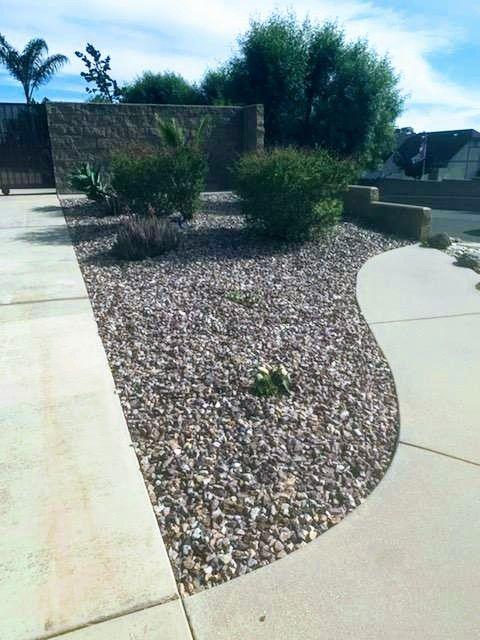
Rock, gravel, decomposed granite, and mulch are some of the most popular ways to finish a yard in the Inland Empire. They cut down on mowing, they handle our long dry summers, and they make a clean, tidy look out of bare dirt or a tired lawn. But a rock or mulch bed only looks good for years if it goes in the right way. Here is what to think about before you pick a material, and what a proper installation looks like.
Rock, gravel, DG, or mulch: what is the difference?
Each material has its own strengths, and many yards use more than one:
- Decorative rock comes in many sizes and colors, from small pea gravel to larger river rock and cobble. It does not break down, it stays put in the wind better than lighter materials, and it works well in beds, side yards, and parkway strips.
- Gravel is a smaller, more uniform stone that makes a good surface for side yards, paths, and areas you walk through often. Angular, crushed gravel locks together better underfoot than rounded stone, which tends to roll.
- Decomposed granite (DG) is granite broken down into fine particles. Compacted, it makes a firm, natural-looking surface for paths, seating areas, and open spaces. It can be installed loose, or with a stabilizer that helps it hold together and resist erosion.
- Mulch (wood chips or bark) is lighter and softer. It helps the soil underneath hold moisture and stay cooler, and it gives beds a warmer, more natural look. It does break down over time, so it needs to be topped off now and then.
Start with the ground, not the rock
Most rock and mulch problems start with skipped prep. A good installation begins by getting the area ready:
- Clear the area. Old grass, weeds, and roots are removed so they do not push up through the new material. If a lawn is being replaced, the sod is cut out rather than just covered.
- Grade for drainage. The soil is shaped so water moves away from the house, walls, and walkways instead of pooling. Grade also matters near stucco walls, where the finished surface should stay below the weep screed at the base of the wall.
- Lay weed barrier where it makes sense. Under rock and gravel, a quality landscape fabric helps keep weeds down and keeps the stone from sinking into the soil. It is pinned down and overlapped at the seams so weeds cannot sneak through the gaps.
- Compact the base for DG. Decomposed granite needs a firm, compacted base and is usually installed in layers that are moistened and compacted one at a time. Skipping this step is why some DG paths turn soft, rutted, or muddy.
Take care of the irrigation first
Before any rock or mulch goes down, it is the right time to look at the sprinklers underneath. Once a bed is covered, digging up lines is a lot more work. If you are converting a lawn area to rock or mulch, the spray heads in that area usually need to be capped or removed, and any zone that still serves the area may be a good candidate for a drip system conversion. Drip tubing and emitters can run under mulch, and under the fabric in rock beds, so water goes only where it is needed and the surface stays clean.
This is also a good moment to fix leaks, replace old valves, and make sure valve boxes are set at the right height so they stay accessible after the new material goes in.
Edging keeps everything in place
Without a clean border, gravel drifts into the lawn, mulch washes onto the sidewalk, and DG spreads into the beds next to it. Edging gives each material a clear line. Bender board edging is a common choice because it can follow straight runs or gentle curves, and it holds rock, mulch, and DG back from lawns and walkways.
How much material and how deep?
Depth depends on the material and how the area is used. A layer that is too thin lets fabric or soil show through and invites weeds, while a layer that is too deep can be harder to walk on and wastes material. Mulch also needs to be kept back from the base of walls and away from wood fences. When we put together an estimate, we measure the area and figure the right depth for the material, so you are not left with bare spots or a pile left over in the driveway.
Local yards, local conditions
In Fontana, strong winds through the pass can move lightweight mulch around, so heavier bark, rock, or stabilized DG often holds up better in exposed areas. In Redlands, many older homes have mature sprinkler systems under existing beds, which makes checking the irrigation before the new material goes down especially worthwhile. Wherever you are in the Inland Empire, the same rule applies: good prep and good edging are what make a rock or mulch yard last.
Keeping it looking good
A well-installed rock, gravel, or DG area needs very little care. Pull the occasional weed before it spreads, rake gravel back into place where it gets kicked around, and blow leaves off rather than letting them break down into soil on top of the stone. Mulch beds should be topped off as the old layer breaks down. DG paths may need a light top-up and re-compaction in high-traffic spots over time.
Ready for a cleaner, lower-maintenance yard?
All Professional Landscape installs rock, gravel, decomposed granite, and mulch for homes and businesses across the Inland Empire, along with the irrigation work and edging that go with it. See our rocks and mulch installation service, call 909.215.5795, or request a free quote online. We are available Monday through Friday, 8:00 AM to 5:00 PM.
Ready for a healthier, better-looking yard?
Call for a free estimate or send us a few details and we will set up a time to look at your yard.