Replacing Your Lawn with a Water-Wise Yard in the Inland Empire
A practical guide to swapping thirsty lawn for rock, mulch, and drip irrigation in Inland Empire yards, plus what to check before you start.
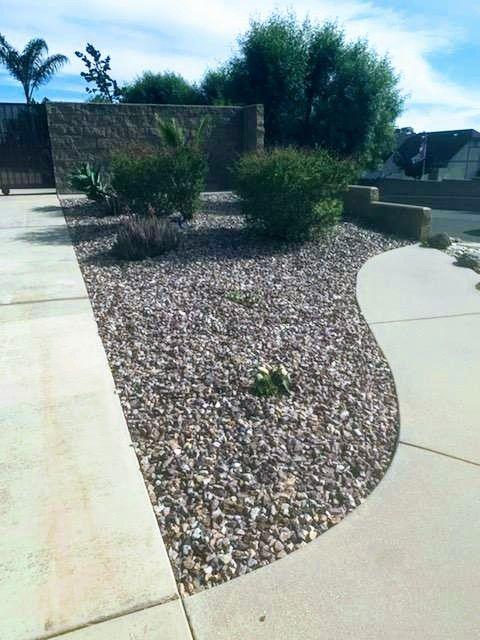
Grass is one of the thirstiest things in an Inland Empire yard. Long, hot summers, dry Santa Ana winds, and watering-day rules make a green lawn hard to keep up. More homeowners are deciding to keep a small patch of lawn where kids and pets actually use it and turn the rest into a water-wise yard of rock, mulch, and drip irrigation. Here is how to think it through before you start.
Decide how much lawn you really need
You do not have to remove every blade of grass. Walk your yard and ask where the lawn earns its keep. A backyard play area or a spot for the dog may be worth keeping. A front parkway strip, a narrow side yard, or a steep slope usually is not. Those areas are hard to water evenly, often send water onto the sidewalk or street, and rarely get used. They are the best places to start.
Keeping a smaller lawn also makes the rest of the system easier to manage. Fewer spray zones means fewer heads to clog, break, or tilt, and less chance of a soggy spot from a leak you cannot see.
Check with your water district before you dig
Many Southern California water agencies have offered programs that encourage replacing turf with water-wise landscaping, and some of them require you to apply and be approved before any grass is removed. Rules, eligibility, and funding change from year to year, and they differ from one agency to the next. Before you start, look up your water provider on your bill, check its website or call, and find out what is available for your address and what the requirements are. That one step can save you from missing out on a program because the work was done too early.
Plan the irrigation first
The biggest mistake in a lawn conversion is leaving the old spray heads in place and simply covering the area with rock. Spray heads in a rock or mulch bed waste water, spray walls and windows, and keep weeds watered. Once the lawn is gone, the zone needs to change too.
- Cap what you do not need. Spray heads in areas that will be bare rock or hardscape can be capped below grade.
- Convert the rest to drip. Drip lines deliver water slowly at the root zone through tubing and emitters, with far less overspray and runoff. Our drip system conversion service handles the pressure regulation, filtering, and new lines.
- Reprogram the timer. Drip zones run longer and less often than spray zones. An older timer that is hard to set may be worth replacing. See sprinkler timers and valves.
Remove the grass and prep the ground
Old turf has to come out, roots and all, or it will push back up through the new bed. Bermuda grass in particular is known for coming back if it is not fully removed. After removal, the ground should be graded so water flows away from the house, not toward the foundation or into a neighbor's yard. Weed fabric under rock beds helps slow down weeds, though it is not a permanent fix on its own.
Choose rock, mulch, or both
Each surface has a job. A good design often uses a mix of them.
- Decorative rock and gravel hold up well in heat and wind, do not blow away, and look clean in front yards and side yards. Lighter colors reflect more heat, which can matter next to a south- or west-facing wall.
- Bark mulch keeps soil cooler and holds moisture in the bed, which makes it a good fit along borders and in rock or mulch beds.
- Stepping stones or a path give people a place to walk so they are not stepping on drip lines or the new rock and mulch.
We install all of these through our rocks and mulch service, and a bender board edge keeps rock, mulch, and any remaining lawn neatly separated.
Cap spray heads and switch to drip
Once the grass is gone, the old spray pattern usually does not fit the new yard. Spray heads that used to cover lawn will throw water onto rock, the sidewalk, or the side of the house. Cap the heads you no longer need, and convert the zones you are keeping to drip so water soaks in at the soil instead of spraying into the air. Pair the new lines with rock or mulch to hide the tubing, hold moisture, and keep weeds down. Our drip system conversion and rocks and mulch services are built around this kind of lawn-to-bed change.
Local differences matter
Yards in Redlands often have older irrigation that was laid out around a big lawn, so a conversion there frequently starts with sorting out which old lines and valves are still worth keeping. In newer neighborhoods in Fontana, front yards tend to be smaller and windier, which makes rock and drip a natural fit for the parkway and side yards. Either way, the plan should match how your water actually reaches each part of the yard.
Keep it looking good
- Check drip lines a few times a year for kinks, chewed tubing, or clogged emitters.
- Pull weeds while they are small, before they set seed.
- Top off mulch as it breaks down.
- Adjust the timer with the seasons and after a good rain.
Thinking about a lawn conversion?
All Professional Landscape has been doing sprinkler, drip, rock, and mulch work in the Inland Empire since 2013. We can look at your yard, talk through what to keep and what to change, and give you a free estimate. Call 909.215.5795 or request a quote online. We are available Monday through Friday, 8:00 AM to 5:00 PM.
Ready for a healthier, better-looking yard?
Call for a free estimate or send us a few details and we will set up a time to look at your yard.