
How to Spot and Fix Sprinkler Leaks and Broken Irrigation Pipes
Soggy spots, a valve box full of water, or a jump in your water bill can all point to a sprinkler leak. Here is how to find it and what a proper repair involves.
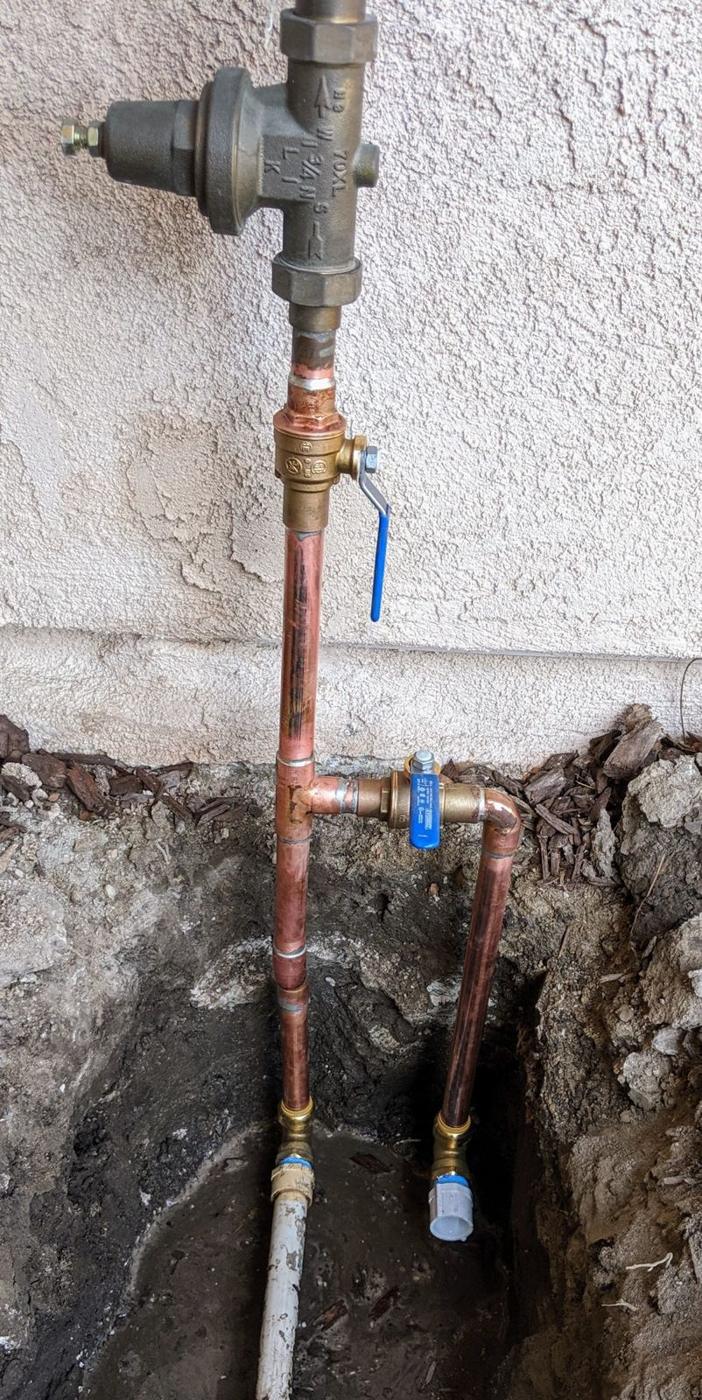
A sprinkler leak rarely announces itself. Most of the time it hides under the grass or rock, quietly wasting water and softening the ground until something gives. In the Inland Empire, where long dry stretches make every gallon count, catching a leak early saves water, protects your yard and hardscape, and usually keeps the repair smaller. Here is how to tell if you have one and what a proper fix looks like.
Signs your irrigation system is leaking
Some leaks only show up while a zone is running. Others leak around the clock. Watch for any of these:
- Soggy or spongy spots that stay wet long after the sprinklers shut off, or a patch of lawn that is greener than everything around it.
- Water bubbling up from the ground, or running down the gutter when nobody is watering.
- A valve box full of water. A little moisture can be normal, but standing water often points to a leaking valve or fitting.
- Weak pressure or heads that barely pop up. When water escapes through a cracked line, there is less left for the heads on that zone.
- Sinking soil, small holes, or mud in rock and mulch beds, sometimes with algae or mineral stains on nearby concrete.
- A higher water bill without a change in how you water.
Use your water meter to confirm it
Your water meter is one of the best leak detectors you have. Make sure no one is using water in the house, the timer is off, and nothing is running outside. Then look at the meter. Many meters have a small leak indicator, often a little dial or triangle, that spins when any water is moving. If it turns while everything is off, water is going somewhere. If the house has a separate shutoff for the irrigation line, closing it and checking the meter again can help tell you whether the leak is on the sprinkler side or the plumbing side.
If the meter is still while the system is off but you see wet spots after watering, the leak is most likely in a zone line or a head, which only holds pressure while that zone is running.
Mainline leaks vs. zone leaks
It helps to know which part of the system you are dealing with:
- The mainline runs from your water supply to the valves. It is under pressure all the time, so a break there leaks day and night and should be handled right away. Shut off the irrigation supply until it is repaired.
- Lateral (zone) lines run from each valve to the sprinkler heads. They only carry water while that zone is on, so a crack there shows up as wet spots and poor coverage during a cycle.
- Valves can leak at the fittings, or fail to close fully so a zone keeps seeping or running after the timer shuts it off. Worn diaphragms, debris, and old solenoids are common culprits. Our sprinkler timers and valves service covers valve repair and replacement.
- Heads and risers crack, snap off, or leak at the base, especially along driveways and walkways where they get stepped on or driven over.
What usually causes sprinkler leaks
Most leaks come down to a handful of causes. Older PVC gets brittle with age and sun exposure where it is near the surface. Roots push against and crack shallow lines. Shovels and post-hole diggers from other projects hit pipes that were not marked. Cars and mowers break heads near the edges of the lawn. High water pressure also stresses fittings, valves, and heads over time, which is why many systems have a pressure regulator on the supply. If a regulator has failed, fixing one leak may just move the problem somewhere else.
What a proper repair involves
A good repair is more than a quick patch:
- Find the exact spot. The wettest area is not always directly over the break, because water follows the path of least resistance through the soil.
- Shut off the water and dig carefully around the pipe so the damaged section can be seen clearly, without nicking other lines or wires.
- Cut out the damaged section and replace it with new pipe and the right fittings, such as couplings or repair fittings sized to the line.
- Glue the joints correctly with primer and solvent cement, and give them the cure time the manufacturer calls for before the line goes back under pressure.
- Flush and test. Turn the zone back on, check the repair for drips, and make sure every head on the zone pops up and sprays where it should.
- Backfill and restore the turf, rock, or mulch so the area looks like it did before.
Local yards, local problems
In older neighborhoods in San Bernardino, many systems have aging pipe and valves that have been patched more than once, so one leak is often a sign that other parts of the system are near the end of their life. In Rialto and other parts of the valley, wind-blown debris and hard summers are tough on shallow lines and exposed risers. In either case, a careful look at the whole zone after a repair helps catch the next problem before it shows up on your water bill.
When to call a pro
A single snapped head is often an easy fix. It is worth calling for help when you have a mainline break, a valve that will not shut off, leaks that keep coming back, or wet spots you cannot trace. Our sprinkler repair service handles leaks, broken pipes, mainline breaks, valves, and pressure regulators for homes and businesses across the Inland Empire.
Need a leak tracked down?
All Professional Landscape can find the leak, explain what failed, and give you a free estimate on the repair. Call 909.215.5795 or request a quote online. We are available Monday through Friday, 8:00 AM to 5:00 PM.
Ready for a healthier, better-looking yard?
Call for a free estimate or send us a few details and we will set up a time to look at your yard.