
Should You Convert Your Sprinklers to Drip? A Guide for Inland Empire Yards
Where drip irrigation makes sense, how a sprinkler-to-drip conversion works, and how it pairs with rock, mulch, and planters.
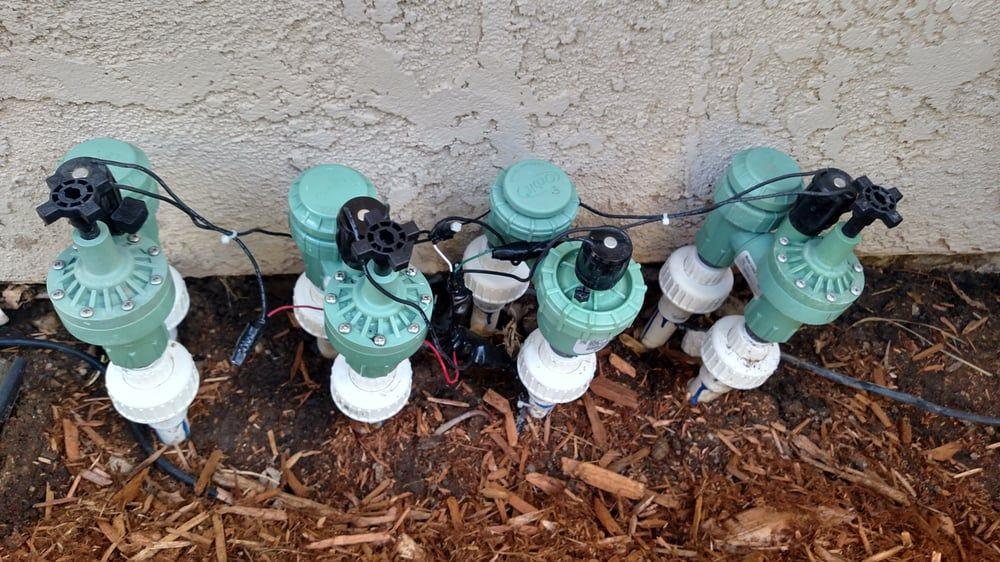
Spray heads are great for lawns. In planter beds, along walls, and on slopes, they often waste water. Converting those zones to drip puts water right where plants need it.
What drip irrigation is
Drip systems use tubing and small emitters to deliver water slowly at the base of each plant. Less water lands on walls, walkways, and bare soil, and less is lost to wind and evaporation.
Good candidates for drip
- Shrub and flower beds where spray hits the house or fence
- Trees and palms in rock or mulch beds
- Narrow side yards and parkway strips
- Slopes where spray water runs off
- Areas where lawn has been replaced with rock or mulch
How a conversion works
In many yards, an existing sprinkler zone can be converted rather than rebuilt from scratch. The zone typically gets pressure regulation and filtering, the spray heads are capped or replaced, and drip lines are run to each plant. The timer is then adjusted, because drip zones run longer and less often than spray zones.
Pair drip with rock or mulch
A layer of rock or mulch over drip lines hides the tubing, holds moisture in the soil, and helps keep weeds down. Add a planter border and the bed stays neat.
Check with your water district
Many Inland Empire water districts encourage efficient irrigation. Programs and rules change, so check with yours about what is available for your home.
Ready to make the switch? See our drip system conversion service or call 909.215.5795.
Ready for a healthier, better-looking yard?
Call for a free estimate or send us a few details and we will set up a time to look at your yard.